For Don Carlos
Narrative Synopsis
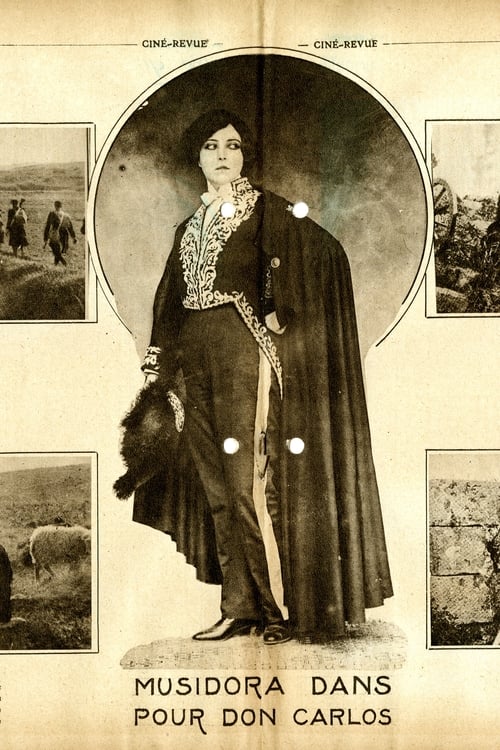
Pour Don Carlos was the biggest production by Société des Films Musidora (est. December 10, 1919). Based on a novel by Pierre Benoît, Musidora’s first creatively autonomous work is set during the conflict between Carlists and Bourbons in late 19th century Spain. Benoît insisted that Jacques Lasseyne, a Spanish grandee who put money into the production, should co-direct. The film was shot in 1920, in the Spanish Basque Country. It represents a turning point in Musidora’s career, sparking her passionate love affair with a country and a culture that welcomed her as a great star. Above all, though, she encountered Antonio Cañero, a bullfighter who acted as her technical adviser on the film. Because of him, she did all she could to ensure that her succeeding productions, until 1926, were shot in Spain. Pour Don Carlos was released in Paris and in Madrid in December 1921, in a shortened version because its original, three-hour length made it impossible to release in the market of the time.
Streaming Availability & Discovery
Platform catalog indices and licensed providers for For Don Carlos.
Narrative DNA Intelligence
Slow-Burn Atmospheric
7 / 10
Emotionally Piercing
Emotionally Grounded
Calculated narrative telemetry highlights notable thematic precision within Drama. With an established critical baseline of 7.0/10, the plot emphasizes slow-burn atmospheric pacing paired with an ending characterized by emotionally piercing.
Low
Engagement barrierStandard Rhythmic Build
Story velocityHigh (Layered Nuances)
Hidden layers"Maintain active attention during the pivotal turning points. The narrative progression hinges on subtle thematic cues established in the first two acts before converging in the climax."
Spoiler Vault: Ending Decryption
Classified Climax & Ambiguity Breakdown
Contains complete plot revelations, climax analysis, and hidden clues for For Don Carlos. Proceed only if you have watched the finale.