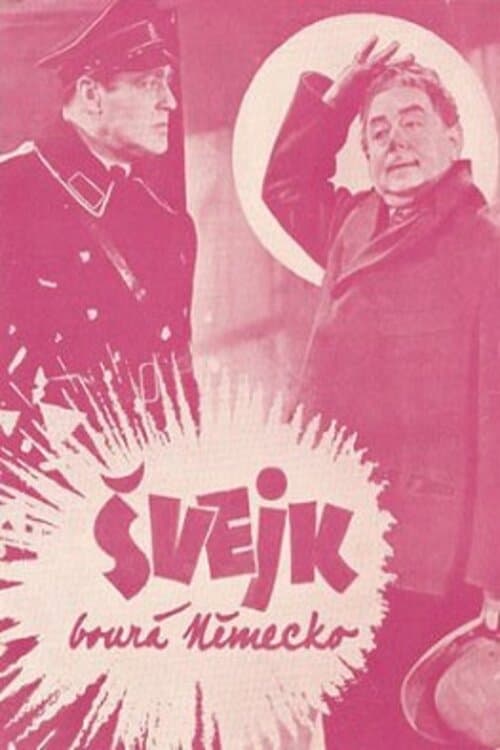
Svejk Wrecks Germany
Narrative Synopsis
KAREL LAMAČ (1987-1952), who worked in Germany for a long time, was forced to leave for France and then Great Britain before Hitler's fascism, where he continued to direct films. His film Švejk is Destroying Germany from 1943 was created under the influence of wartime circumstances and was intended mainly for a British audience. Perhaps this is also why the tone of the original Czech hero of Hašek's humorous original deviates from his traditional way of portraying him. He transfers him to the wartime reality of the time and, through a series of coincidences, makes him a military servant of the Gestapo commander, which gives Švejk the opportunity to save many people from deportation to concentration camps. Lamač is therefore not driven by the motive of an authorial interpretation but rather by the need for propaganda. This is also emphasized by Foreign Minister Jan Masaryk, whose opening words were added to this comedy in 1947, when it was released into Czechoslovak film distribution.
Streaming Availability & Discovery
Platform catalog indices and licensed providers for Svejk Wrecks Germany.
Narrative DNA Intelligence
Brisk & Engaging
9 / 10
Uplifting Closure
Cinematic Narrative
Calculated narrative telemetry highlights notable thematic precision within Comedy. With an established critical baseline of 8.5/10, the plot emphasizes brisk & engaging pacing paired with an ending characterized by uplifting closure.
Low
Engagement barrierStandard Rhythmic Build
Story velocityExceptional (Foreshadowing)
Hidden layers"Maintain active attention during the pivotal turning points. The narrative progression hinges on subtle thematic cues established in the first two acts before converging in the climax."
Spoiler Vault: Ending Decryption
Classified Climax & Ambiguity Breakdown
Contains complete plot revelations, climax analysis, and hidden clues for Svejk Wrecks Germany. Proceed only if you have watched the finale.