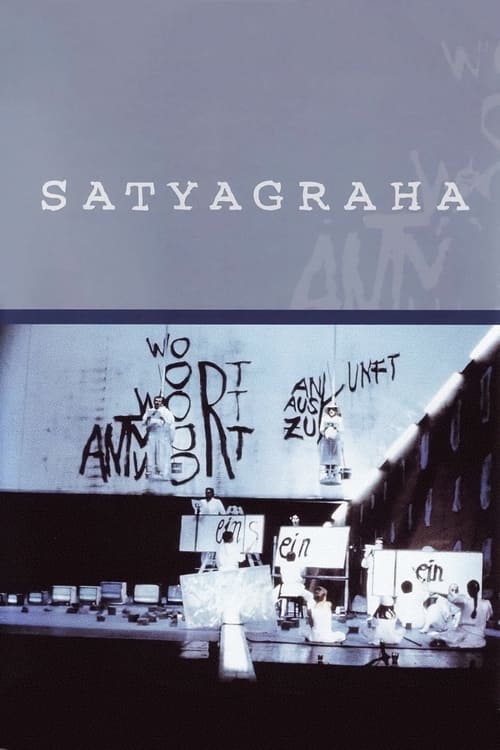
Philip Glass: Satyagraha
Narrative Synopsis
This luminous, visionary opera tells the story of how Mahatma Gandhi developed the philosophy of satyagraha, nonviolent active resistance, as a political revolutionary tool to fight oppression, connecting his lifework to three historical figures who advanced his philosophy: the celebrated Russian writer Leo Tolstoy, the great Indian poet and philosopher Rabindranath Tagore and the heroic American civil rights leader Martin Luther King. The libretto is comprised of passages from “The Bhagavad-Gita,” India’s greatest philosophical epic, and perfectly complements Glass’ ravishing score, mysteriously transporting the audience with a serene power and an all-encompassing sense of peace.
Streaming Availability & Discovery
Platform catalog indices and licensed providers for Philip Glass: Satyagraha.
Narrative DNA Intelligence
Dynamic Narrative Flow
9 / 10
Resonant Resolution
Cinematic Narrative
Calculated narrative telemetry highlights notable thematic precision within Music. With an established critical baseline of 10.0/10, the plot emphasizes dynamic narrative flow pacing paired with an ending characterized by resonant resolution.
Low
Engagement barrierStandard Rhythmic Build
Story velocityExceptional (Foreshadowing)
Hidden layers"Maintain active attention during the pivotal turning points. The narrative progression hinges on subtle thematic cues established in the first two acts before converging in the climax."
Spoiler Vault: Ending Decryption
Classified Climax & Ambiguity Breakdown
Contains complete plot revelations, climax analysis, and hidden clues for Philip Glass: Satyagraha. Proceed only if you have watched the finale.