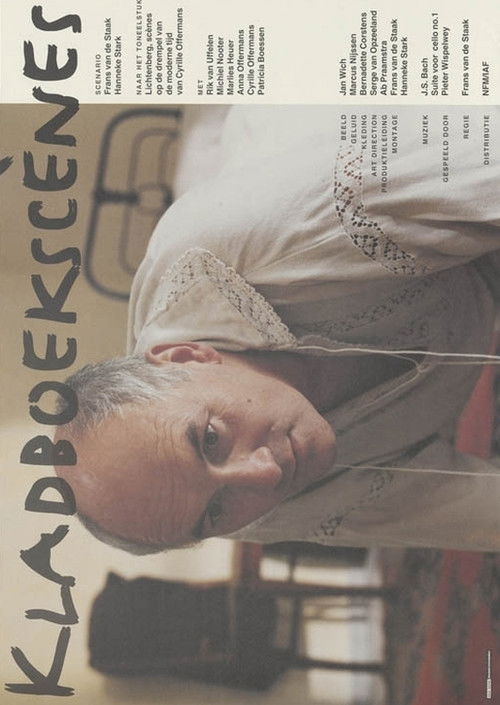
Wastebook scenes
Narrative Synopsis
The film is adapted from a play by Cyrille Offermans Lichtenberg, scenes at the dawn of a new era". Although the protagonist shares some features with the experimental physicist and writer George Christoph Lichtenberg (1742-1799), who wrote the famous Sudelbücher and numerous letters, the film does not pretend any historical accuracy with respect to the real Lichtenberg, but focuses on Offermans' hybrid [partial fictitious] personage. The result is not an interplay between fact and fiction, but a sort of view of Lichtenberg, mouthing some 19th- and 20th- century authors he couldn't have known, strictly speaking, but whose alleged fantastic formulations seem to follow from his own writings in a natural way.
Streaming Availability & Discovery
Platform catalog indices and licensed providers for Wastebook scenes.
Narrative DNA Intelligence
Dynamic Narrative Flow
9 / 10
Resonant Resolution
Cinematic Narrative
Calculated narrative telemetry highlights notable thematic precision within Cinema. With an established critical baseline of 10.0/10, the plot emphasizes dynamic narrative flow pacing paired with an ending characterized by resonant resolution.
Low
Engagement barrierStandard Rhythmic Build
Story velocityExceptional (Foreshadowing)
Hidden layers"Maintain active attention during the pivotal turning points. The narrative progression hinges on subtle thematic cues established in the first two acts before converging in the climax."
Spoiler Vault: Ending Decryption
Classified Climax & Ambiguity Breakdown
Contains complete plot revelations, climax analysis, and hidden clues for Wastebook scenes. Proceed only if you have watched the finale.