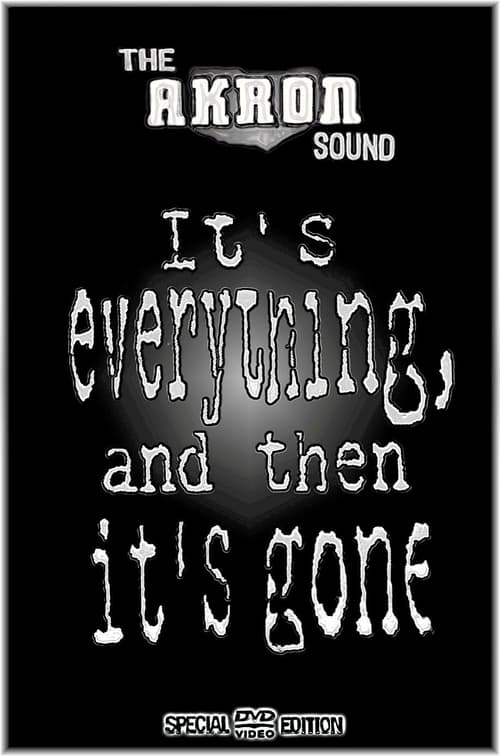
The Akron Sound: It's Everything, and Then It's Gone
Narrative Synopsis
In the early 1970s, rubber was still king in Akron, Ohio. But just a few short years later, Akron's most important product was, ever so briefly, music. In the mid-1970s, a group of local bands took over an old rubber workers' hang-out in downtown Akron called The Crypt and created a mix of punk and art rock that came to be known as "the Akron Sound." And for a while, it was almost "the next big thing." Almost. It's Everything, and Then It's Gone, a Western Reserve PBS production written and directed by Phil Hoffman., takes viewers back to a time when the music really did mean everything. And for the men and women in these local bands, it was a way out of the factory.
Streaming Availability & Discovery
Platform catalog indices and licensed providers for The Akron Sound: It's Everything, and Then It's Gone.
Narrative DNA Intelligence
Slow-Burn Atmospheric
7 / 10
Resonant Resolution
Cinematic Narrative
Calculated narrative telemetry highlights notable thematic precision within Music. With an established critical baseline of 7.0/10, the plot emphasizes slow-burn atmospheric pacing paired with an ending characterized by resonant resolution.
Low
Engagement barrierStandard Rhythmic Build
Story velocityHigh (Layered Nuances)
Hidden layers"Maintain active attention during the pivotal turning points. The narrative progression hinges on subtle thematic cues established in the first two acts before converging in the climax."
Spoiler Vault: Ending Decryption
Classified Climax & Ambiguity Breakdown
Contains complete plot revelations, climax analysis, and hidden clues for The Akron Sound: It's Everything, and Then It's Gone. Proceed only if you have watched the finale.