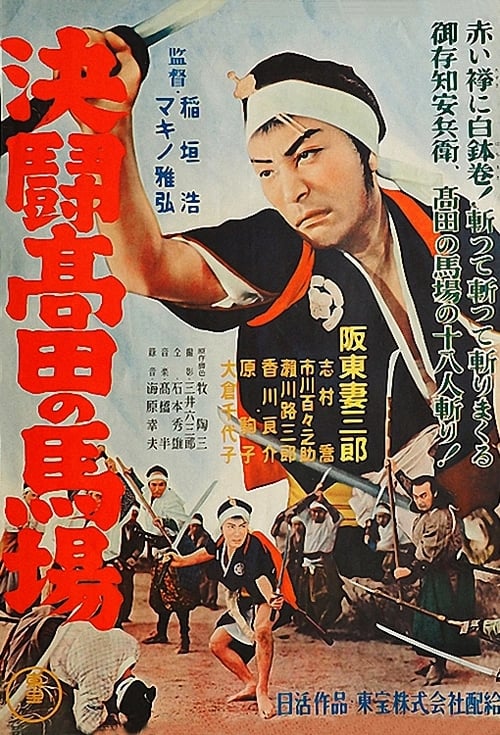
Blood Spilled at Takadanobaba
Narrative Synopsis
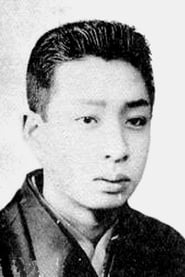
The tale of Nakayama Yasubei’s duel is famous, even if he in reality probably did not cut down 18 opponents. The story has been related in film, rakugo, kodan and on stage many times, in part because Nakayama later joined the famous 47 Ronin (Chushingura) as Horibe Yasubei. But Makino and Inagaki’s version gives no hint of this more serious future, playing up the thrills and the comedy with Bando’s bravura performance. The multiple pans of Yasubei running to the duel are an exemplar of the experimental flourishes of 1930s Japanese cinema and the final duel, performed virtually like a dance number, is a marker of Makino’s love of rhythm and one of the best sword fights in Japanese film history. The film was originally released under the title Chikemuri Takadanoba (Bloody Takadanobaba) with a length of 57 minutes, but suffered some cuts and a title change when it was re-released in 1952.
Where to Stream


Streaming Availability & Discovery
Platform catalog indices and licensed providers for Blood Spilled at Takadanobaba.
Narrative DNA Intelligence
High-Octane Dynamic
8 / 10
Uplifting Closure
Adrenaline-Charged
Calculated narrative telemetry highlights notable thematic precision within Action. With an established critical baseline of 7.0/10, the plot emphasizes high-octane dynamic pacing paired with an ending characterized by uplifting closure.
Low
Engagement barrierStandard Rhythmic Build
Story velocityHigh (Layered Nuances)
Hidden layers"Maintain active attention during the pivotal turning points. The narrative progression hinges on subtle thematic cues established in the first two acts before converging in the climax."
Spoiler Vault: Ending Decryption
Classified Climax & Ambiguity Breakdown
Contains complete plot revelations, climax analysis, and hidden clues for Blood Spilled at Takadanobaba. Proceed only if you have watched the finale.