Television Assassination
Narrative Synopsis
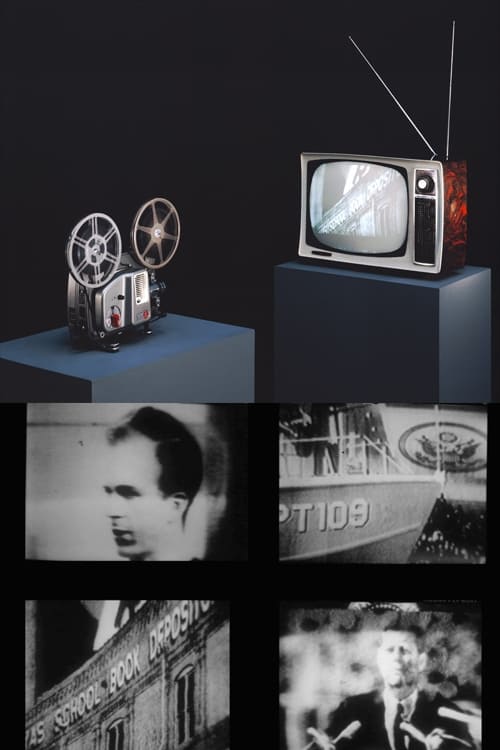
TELEVISION ASSASSINATION is one of two major works that Bruce Conner began in the days immediately following the Kennedy assassination and the artist's own thirtieth birthday, in the fall of 1963. While REPORT utilized montage and a strongly articulated structure to analyze the forces at work in the killing of a President (including our own complicity), TELEVISION ASSASSINATION is a complex, synthesizing work that weaves together fragments from the flux and flow of that history as it was in the process of being constructed and displayed daily to a nation of spectators. A monument to the enduring potency of the Kennedy myth and to the marketers who created it, the installation brings Conner's critique full-circle into the very medium that formalized it. In so doing, the work seems to suggest that the final resting place for the slain President was neither Brookline nor Arlington National Cemetery, but rather in the box, on the tube, held suspended forever on the television screen.
Streaming Availability & Discovery
Platform catalog indices and licensed providers for Television Assassination.
Narrative DNA Intelligence
Dynamic Narrative Flow
8 / 10
Resonant Resolution
Cinematic Narrative
Calculated narrative telemetry highlights notable thematic precision within Cinema. With an established critical baseline of 8.0/10, the plot emphasizes dynamic narrative flow pacing paired with an ending characterized by resonant resolution.
Low
Engagement barrierStandard Rhythmic Build
Story velocityHigh (Layered Nuances)
Hidden layers"Maintain active attention during the pivotal turning points. The narrative progression hinges on subtle thematic cues established in the first two acts before converging in the climax."
Spoiler Vault: Ending Decryption
Classified Climax & Ambiguity Breakdown
Contains complete plot revelations, climax analysis, and hidden clues for Television Assassination. Proceed only if you have watched the finale.