Bridge of Japan
Narrative Synopsis
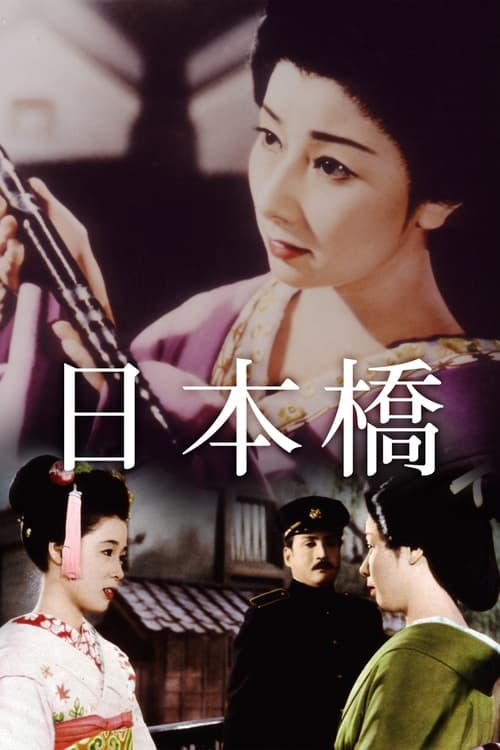
Ichikawa's 1956 adaptation of Nihonbashi was the first to take the work of Kyoka Izumi— until then regarded as a writer of common tragic melodramas—and re-evaluate it as a tanbi-ha work of decadence, aestheticism, and intrigue. Ichikawa's film presents the tragic plot of the young geisha who is unable to enact her love for a man publicly in any way other than a histrionic story of torment, a heart-rending tale of lovers being crushed by fate. Instead, Ichikawa shows the contest of wills that transpires as two geisha, Oko and Kiyoha fight for the top spot in Nihonbashi, the pinnacle of the Tokyo geisha world. Nihonbashi is an elegant, if steely, exposition of manners. The young doctor, Shinzo Katsuragi, is the object of affection for both women, but appears to be more the choice reward for the plotting and thieving of these two early modern superwomen, than a lover they swoon over.
Where to Stream


Streaming Availability & Discovery
Platform catalog indices and licensed providers for Bridge of Japan.
Narrative DNA Intelligence
Slow-Burn Atmospheric
8 / 10
Emotionally Piercing
Intimate & Heartfelt
Calculated narrative telemetry highlights notable thematic precision within Romance. With an established critical baseline of 7.8/10, the plot emphasizes slow-burn atmospheric pacing paired with an ending characterized by emotionally piercing.
Low
Engagement barrierMethodical Slow-Burn
Story velocityHigh (Layered Nuances)
Hidden layers"Maintain active attention during the pivotal turning points. The narrative progression hinges on subtle thematic cues established in the first two acts before converging in the climax."
Spoiler Vault: Ending Decryption
Classified Climax & Ambiguity Breakdown
Contains complete plot revelations, climax analysis, and hidden clues for Bridge of Japan. Proceed only if you have watched the finale.