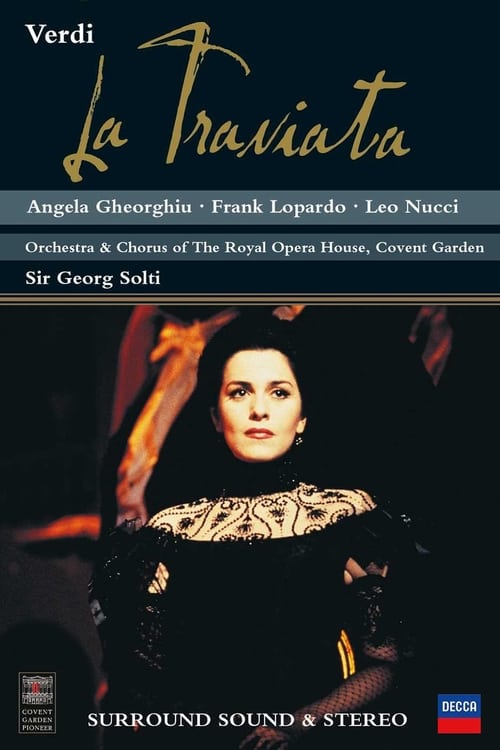
La Traviata
Narrative Synopsis
La traviata (Italian: [la traˈviaːta], "The Fallen Woman"[1][2]) is an opera in three acts by Giuseppe Verdi set to an Italian libretto by Francesco Maria Piave. It is based on La dame aux Camélias (1852), a play adapted from the novel by Alexandre Dumas, fils. The opera was originally entitled Violetta, after the main character. It was first performed on 6 March 1853 at the La Fenice opera house in Venice. Piave and Verdi wanted to follow Dumas in giving the opera a contemporary setting, but the authorities at La Fenice insisted that it be set in the past, "c. 1700". It was not until the 1880s that the composer and librettist's original wishes were carried out and "realistic" productions were staged.[3]
Streaming Availability & Discovery
Platform catalog indices and licensed providers for La Traviata.
Narrative DNA Intelligence
Dynamic Narrative Flow
7 / 10
Resonant Resolution
Cinematic Narrative
Calculated narrative telemetry highlights notable thematic precision within Music. With an established critical baseline of 7.3/10, the plot emphasizes dynamic narrative flow pacing paired with an ending characterized by resonant resolution.
Low
Engagement barrierStandard Rhythmic Build
Story velocityHigh (Layered Nuances)
Hidden layers"Maintain active attention during the pivotal turning points. The narrative progression hinges on subtle thematic cues established in the first two acts before converging in the climax."
Spoiler Vault: Ending Decryption
Classified Climax & Ambiguity Breakdown
Contains complete plot revelations, climax analysis, and hidden clues for La Traviata. Proceed only if you have watched the finale.