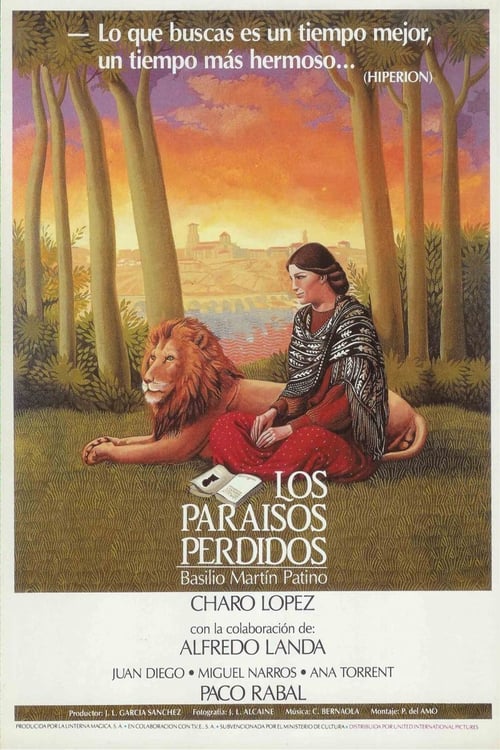
The Lost Paradise
Narrative Synopsis
This literary film is imbued with the disenchantment of Spanish exiles who left their homes to protest Franco's fascist regime and then returned after its demise to find that democracy had not instilled either ethics or deep motivation in government leaders. Director Basilio Martin Patino presents his story, and a large part of the film is based on his own life, through the experiences of an exiled heroine played by Charo Lopez. She has returned to Spain to look for meaning in her life, something that she never found living in Germany, not even after having a child. She is also in the process of translating the German lyric poet Friederich Holderlin (see the 1985 Halfte Des Lebens) into Spanish, focusing on his epic Hyperion. Excerpts from the translation are voiced over throughout the film. As she looks up old friends from many, many years ago, even those who have achieved worldly success are suffering from the same ennui that propelled her back home.
Streaming Availability & Discovery
Platform catalog indices and licensed providers for The Lost Paradise.
Narrative DNA Intelligence
Slow-Burn Atmospheric
7 / 10
Emotionally Piercing
Emotionally Grounded
Calculated narrative telemetry highlights notable thematic precision within Drama. With an established critical baseline of 6.8/10, the plot emphasizes slow-burn atmospheric pacing paired with an ending characterized by emotionally piercing.
Low
Engagement barrierStandard Rhythmic Build
Story velocityHigh (Layered Nuances)
Hidden layers"Maintain active attention during the pivotal turning points. The narrative progression hinges on subtle thematic cues established in the first two acts before converging in the climax."
Spoiler Vault: Ending Decryption
Classified Climax & Ambiguity Breakdown
Contains complete plot revelations, climax analysis, and hidden clues for The Lost Paradise. Proceed only if you have watched the finale.