The Beggar's Opera
Narrative Synopsis
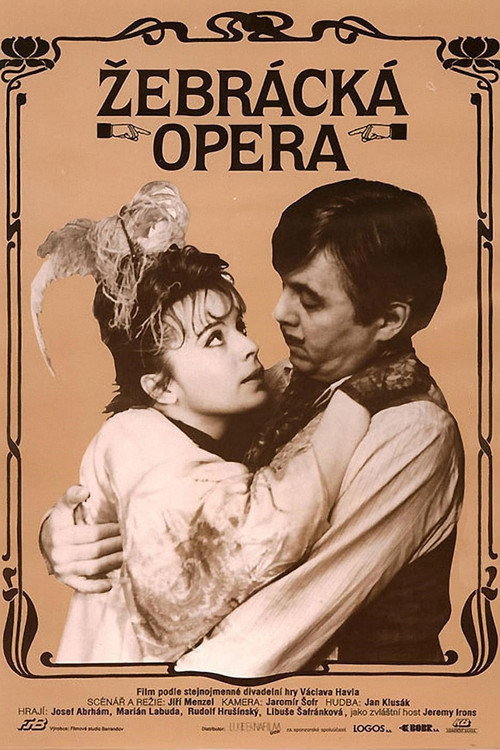
Unlike any other opera, the so-called Beggar's Opera is not just one composition, but a lineage of adapted compositions, beginning with the original hugely successful 1728 political satire written by Englishman John Gay. Composers and writers have penned variations on it ever since. The most famous of these was A Threepenny Opera by Bertholt Brecht and Kurt Weill. Some things these compositions share in common is their setting among the poor and criminal classes, and the roguish character Macheath. This production is based on an adaptation of Gay's original by Vaclav Havel the freedom-fighter, writer and philosopher who became the first (and only) president of the united post-communist country of Czechoslovakia, and it retains many traces of its theatrical origins. Film reviewers were not too tolerant of what they called "slavish adherence" to the noted Czech writer's stage production, but theater, philosophy and history buffs may feel otherwise.
Where to Stream


Streaming Availability & Discovery
Platform catalog indices and licensed providers for The Beggar's Opera.
Narrative DNA Intelligence
High-Octane Dynamic
5 / 10
Uplifting Closure
Cinematic Narrative
Calculated narrative telemetry highlights notable thematic precision within Comedy. With an established critical baseline of 5.2/10, the plot emphasizes high-octane dynamic pacing paired with an ending characterized by uplifting closure.
Low
Engagement barrierHigh-Velocity Acceleration
Story velocityModerate (Direct Narrative)
Hidden layers"Maintain active attention during the pivotal turning points. The narrative progression hinges on subtle thematic cues established in the first two acts before converging in the climax."
Spoiler Vault: Ending Decryption
Classified Climax & Ambiguity Breakdown
Contains complete plot revelations, climax analysis, and hidden clues for The Beggar's Opera. Proceed only if you have watched the finale.