Gloria!
Narrative Synopsis
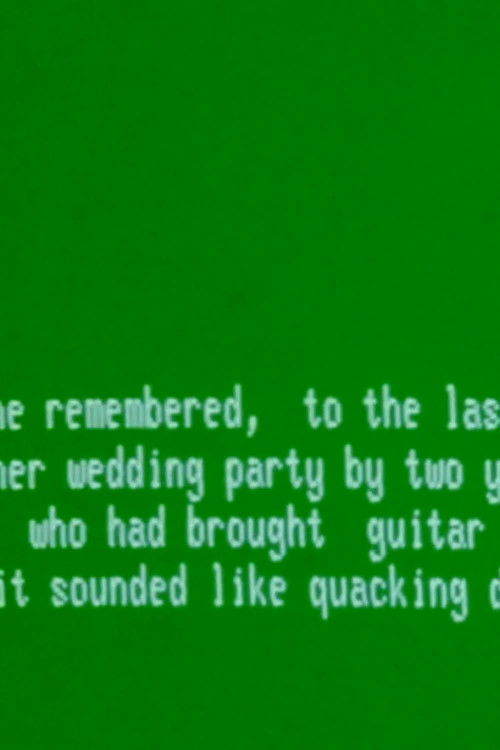
In GLORIA! Frampton juxtaposes nineteenth-century concerns with contemporary forms through the interfacing of a work of early cinema with a videographic display of textual material. These two formal components (the film and the texts) in turn relate to a nineteenth-century figure, Frampton's maternal grandmother, and to a twentieth-century one, her grandson (filmmaker Frampton himself). In attempting to recapture their relationship, GLORIA! becomes a somewhat comic, often touching meditation on death, on memory and on the power of image, music and text to resurrect the past.
Where to Stream

Streaming Availability & Discovery
Platform catalog indices and licensed providers for Gloria!.
Narrative DNA Intelligence
Slow-Burn Atmospheric
5 / 10
Resonant Resolution
Cinematic Narrative
Calculated narrative telemetry highlights notable thematic precision within Documentary. With an established critical baseline of 4.9/10, the plot emphasizes slow-burn atmospheric pacing paired with an ending characterized by resonant resolution.
Moderate
Engagement barrierStandard Rhythmic Build
Story velocityModerate (Direct Narrative)
Hidden layers"Maintain active attention during the pivotal turning points. The narrative progression hinges on subtle thematic cues established in the first two acts before converging in the climax."
Spoiler Vault: Ending Decryption
Classified Climax & Ambiguity Breakdown
Contains complete plot revelations, climax analysis, and hidden clues for Gloria!. Proceed only if you have watched the finale.
![Matrix [First Dream] poster](https://image.tmdb.org/t/p/w500/hmh8u4S7QjokgGBMLG70vB2zomy.jpg)